The Essays of Arthur Schopenhauer
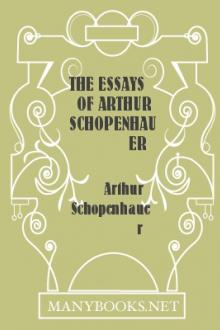
The Essays of Arthur Schopenhauer
The Art of Controversy
 Free Download
Book Excerpt
ct is disputation, he declares at the same time that it is also the discovery of truth.[1] Again, he says, later on, that if, from the philosophical point of view, propositions are dealt with according to their truth, Dialectic regards them according to their plausibility, or the measure in which they will win the approval and assent of others.[2] He is aware that the objective truth of a proposition must be distinguished and separated from the way in which it is pressed home, and approbation won for it; but he fails to draw a sufficiently sharp distinction between these two aspects of the matter, so as to reserve Dialectic for the latter alone.[3] The rules which he often gives for Dialectic contain some of those which properly belong to Logic; and hence it appears to me that he has not provided a clear solution of the problem.
[Footnote 1: Topica, bk. i., 2.]
[Footnote 2: Ib., 12.]
[Footnote 3: On the other hand, in his book De Sophisticis Elenchis, he takes t
FREE EBOOKS AND DEALS
(view all)








Popular books in Essays, Philosophy

More books by Arthur Schopenhauer
(view all)

Readers reviews
4.5
LoginSign up

Great book. Recommended reading. This essay can be read in an evening, it has app. 88 pages. Contents of this book is:
THE ART OF CONTROVERSY--
1. PRELIMINARY: LOGIC AND DIALECTIC
2. THE BASIS OF ALL DIALECTIC
3. STRATAGEMS
ON THE COMPARATIVE PLACE OF INTEREST AND BEAUTY IN WORKS OF ART
PSYCHOLOGICAL OBSERVATIONS
ON THE WISDOM OF LIFE: APHORISMS
GENIUS AND VIRTUE
THE ART OF CONTROVERSY--
1. PRELIMINARY: LOGIC AND DIALECTIC
2. THE BASIS OF ALL DIALECTIC
3. STRATAGEMS
ON THE COMPARATIVE PLACE OF INTEREST AND BEAUTY IN WORKS OF ART
PSYCHOLOGICAL OBSERVATIONS
ON THE WISDOM OF LIFE: APHORISMS
GENIUS AND VIRTUE
- Upvote (0)
- Downvote (0)
This is a wonderful, easily understood, readable
discussion of the difference between logic and
pseudo-logical argument tools and tricks to pull the wool over the eyes of the other persons.
This is important reading for young people.
Frequently, arguments which seem valid are false--tricks. This booklett tells how to recognize the phony and use it also.
discussion of the difference between logic and
pseudo-logical argument tools and tricks to pull the wool over the eyes of the other persons.
This is important reading for young people.
Frequently, arguments which seem valid are false--tricks. This booklett tells how to recognize the phony and use it also.
03/19/2008